Liberty Bell from the Washington Pass Overlook along the North Cascades Highway, Washington

Category Archives: North Cascades
Mountain Goat

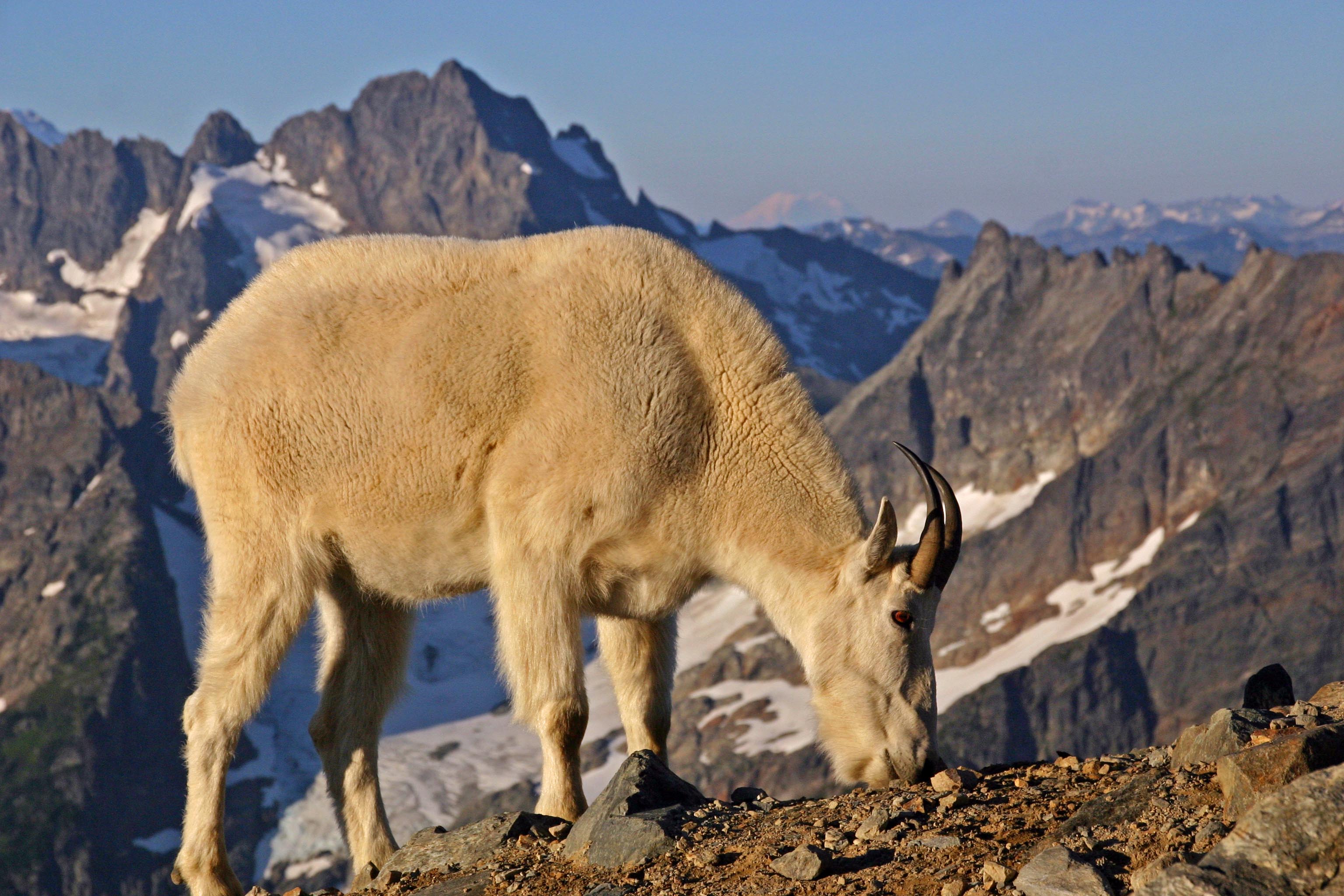
This mountain goat came early one morning to visit at Sahale Glacier Camp in North Cascades National Park. 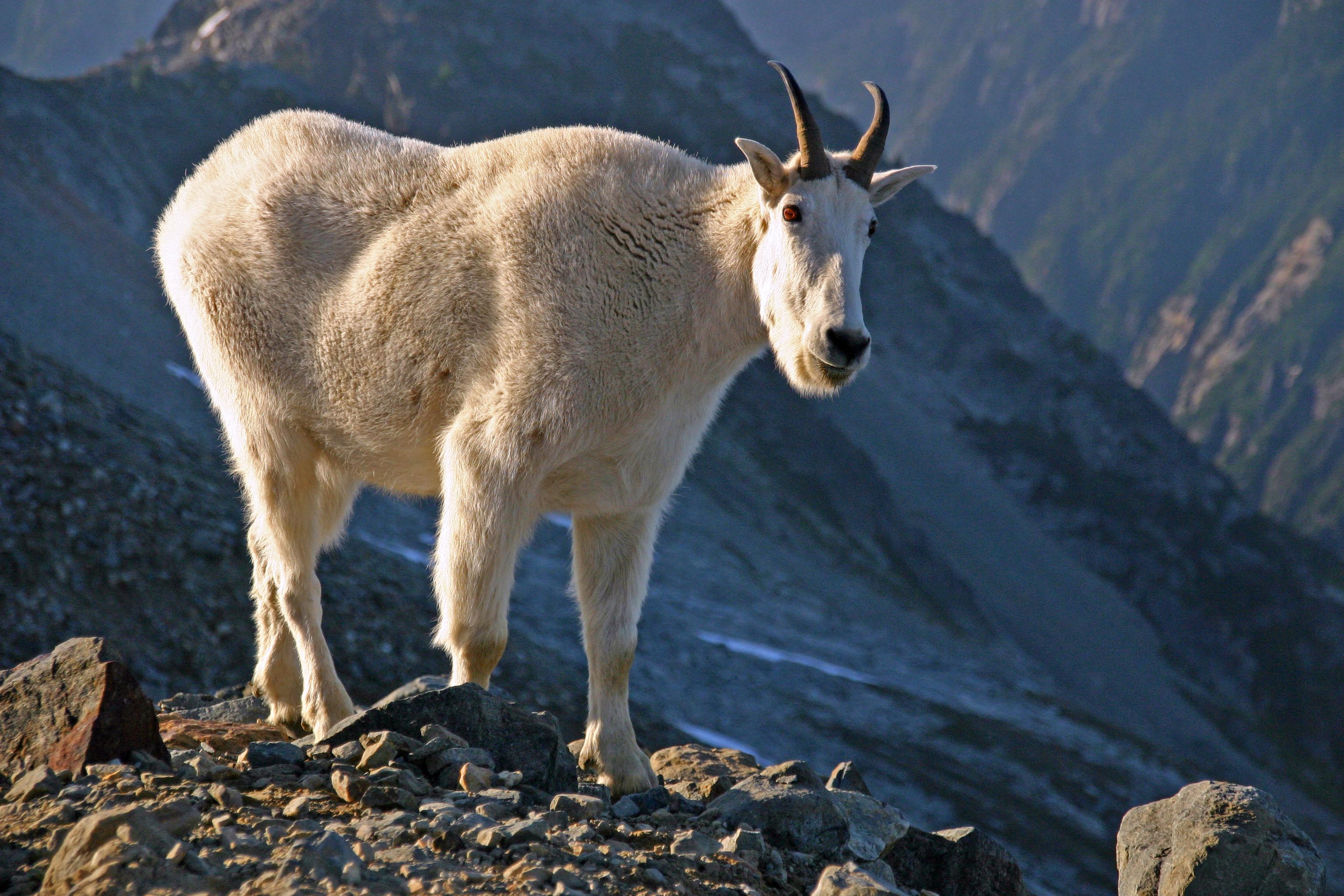
The tent sites are atop three big piles of rubble, from the glacier above.
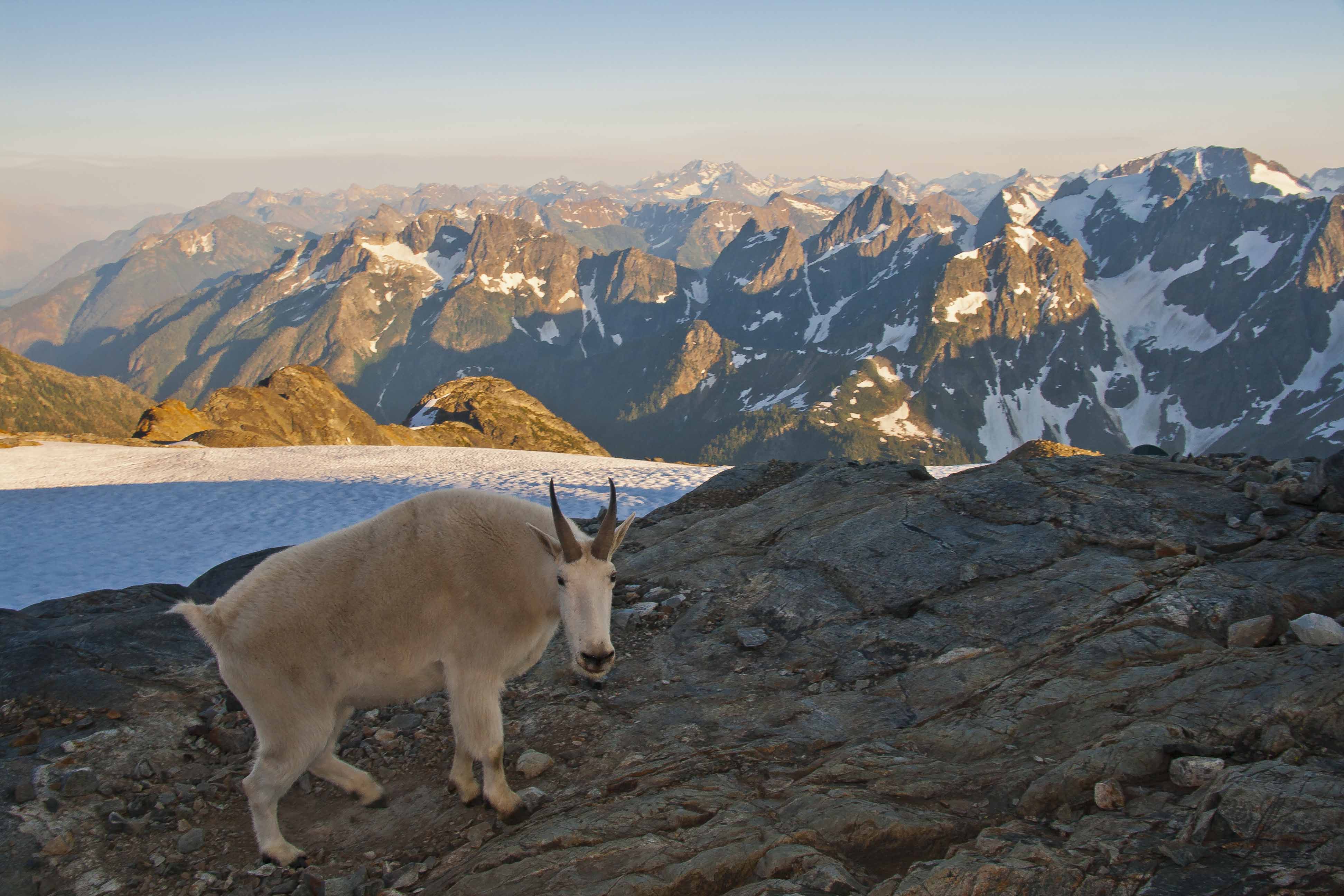
The goat was hanging out looking for places where someone had peed so that he could get some salt!
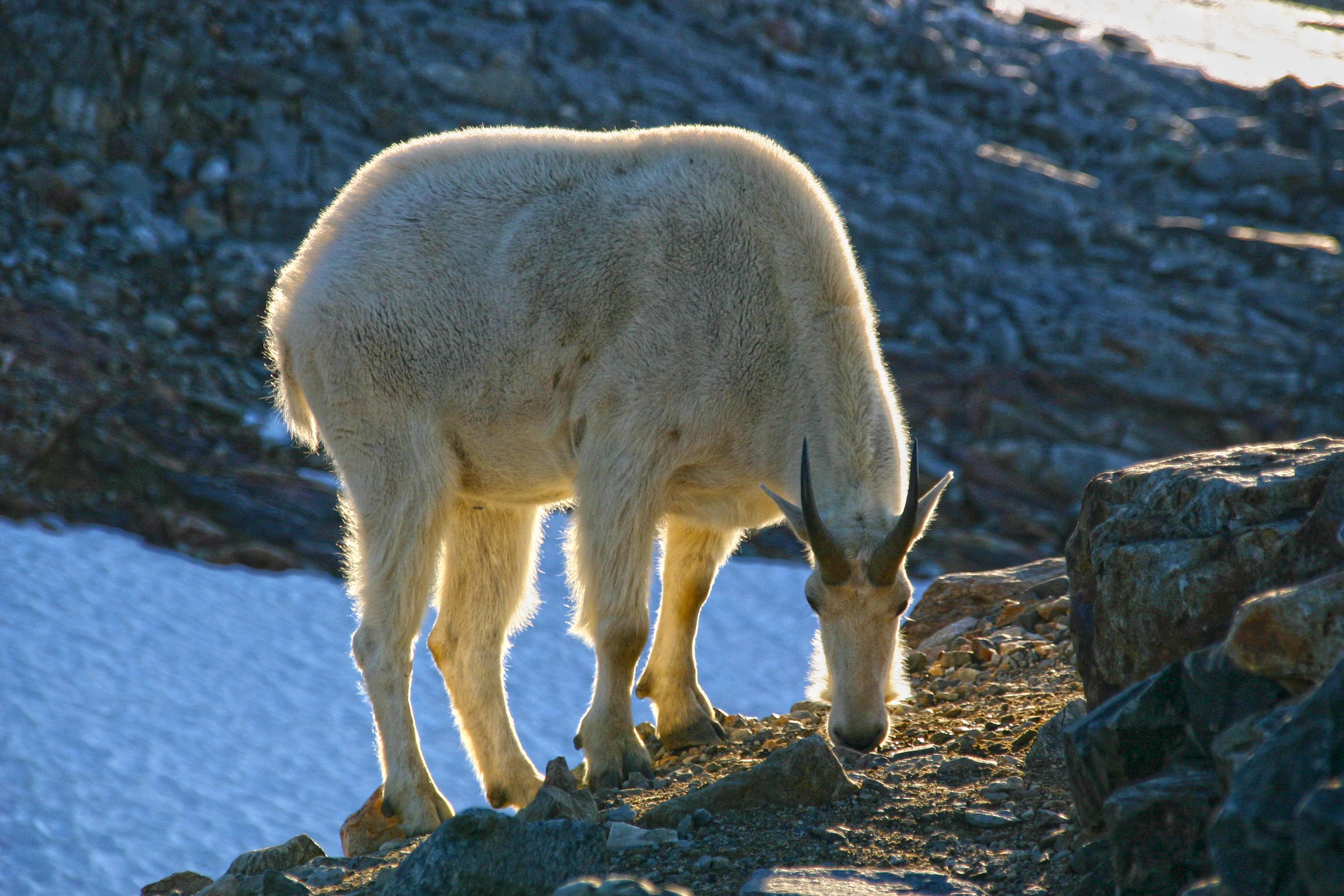
The goat had a minimum safe distance of about 10 feet. He was happy to be that close, but if I took one step closer he would back off that same distance.
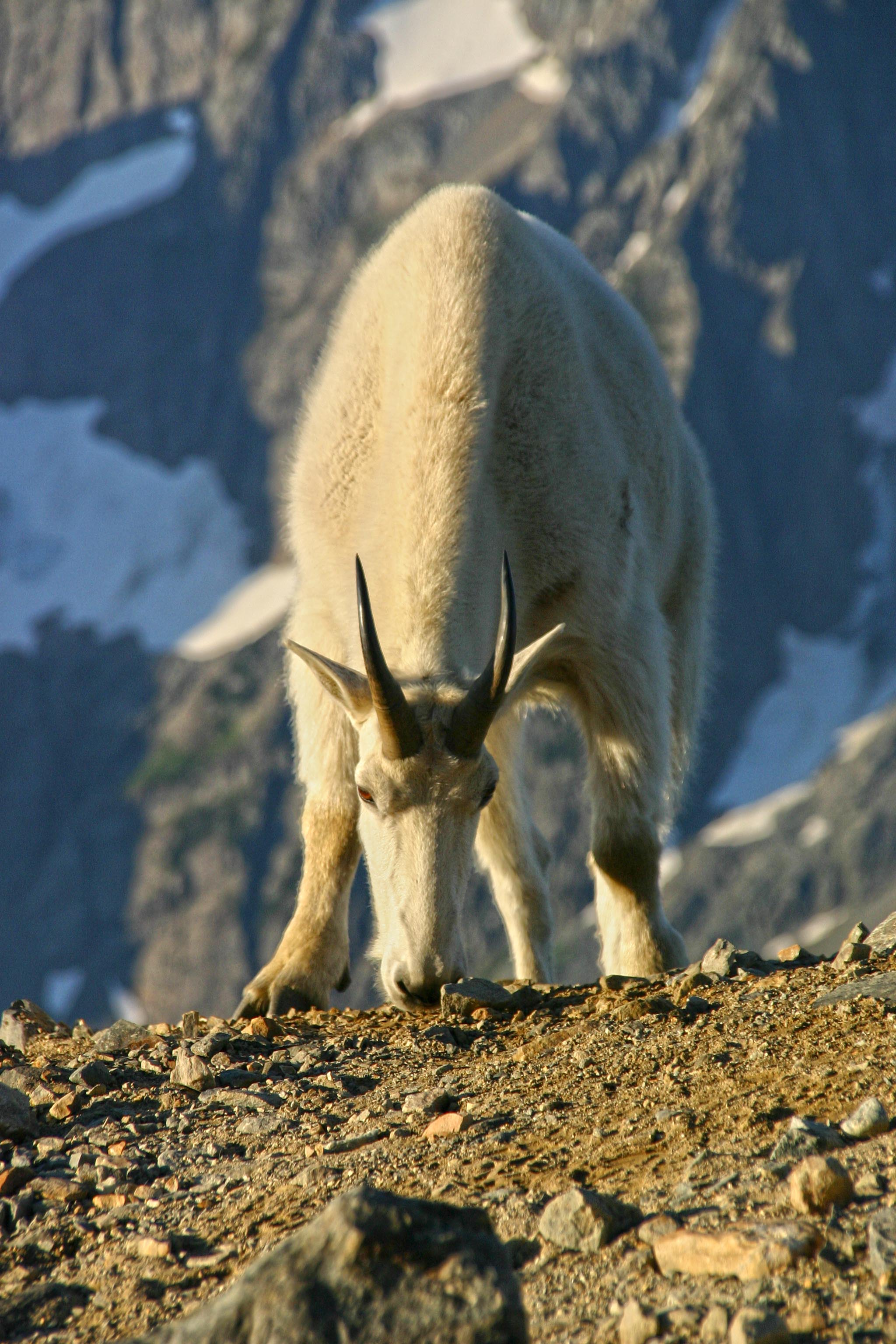
The large white mountain way in the distance here is Mount Rainier.
Sahale Camp Photomerge
Photomegre is one of the multitude of Photoshop Tools. It is a system of merging 2 or more images into a panorama.
Here are two original jpeg images from Sahale Glacier Camp. I took these with the thought in mind to later merge them. using a tripod I captured one image and carefully swung the camera on the tripod and lined up the second one. It wasn’t any fancy movement, I made note in my mind of where the frame’s edge was and pointed the camera in the approximate place to take up where the first image left off, planning for some overlap. I was using a 24 mm lens. I set my image quality when capturing the images so that I would have both a RAW file and a jpeg of the shots.


Once back home I opened both of the raw files together in Photoshop CS6 and synchronized them so that what ever changes I made to one were duplicated on the other. I worked to lighten the foreground and darken the sky. Using the sliders for highlights, shadows, exposure, clarity, whites and contrast I played around until I liked the result.
I also used the brush tool on the foreground to bring out more details on the rocks.
I saved the images as jpeg files. Here they are. 

Once this was done and images saved I went to Photomerge, selected the two modified images and let Photoshop work its magic. 
Opening the panorama as a jpeg image I filled in the corners using the clone stamp tool and tweaked the levels settings a bit, and Viola! Here is the final image.

I have printed the image as a 40″ x 15″ canvas print and it is very stunning.
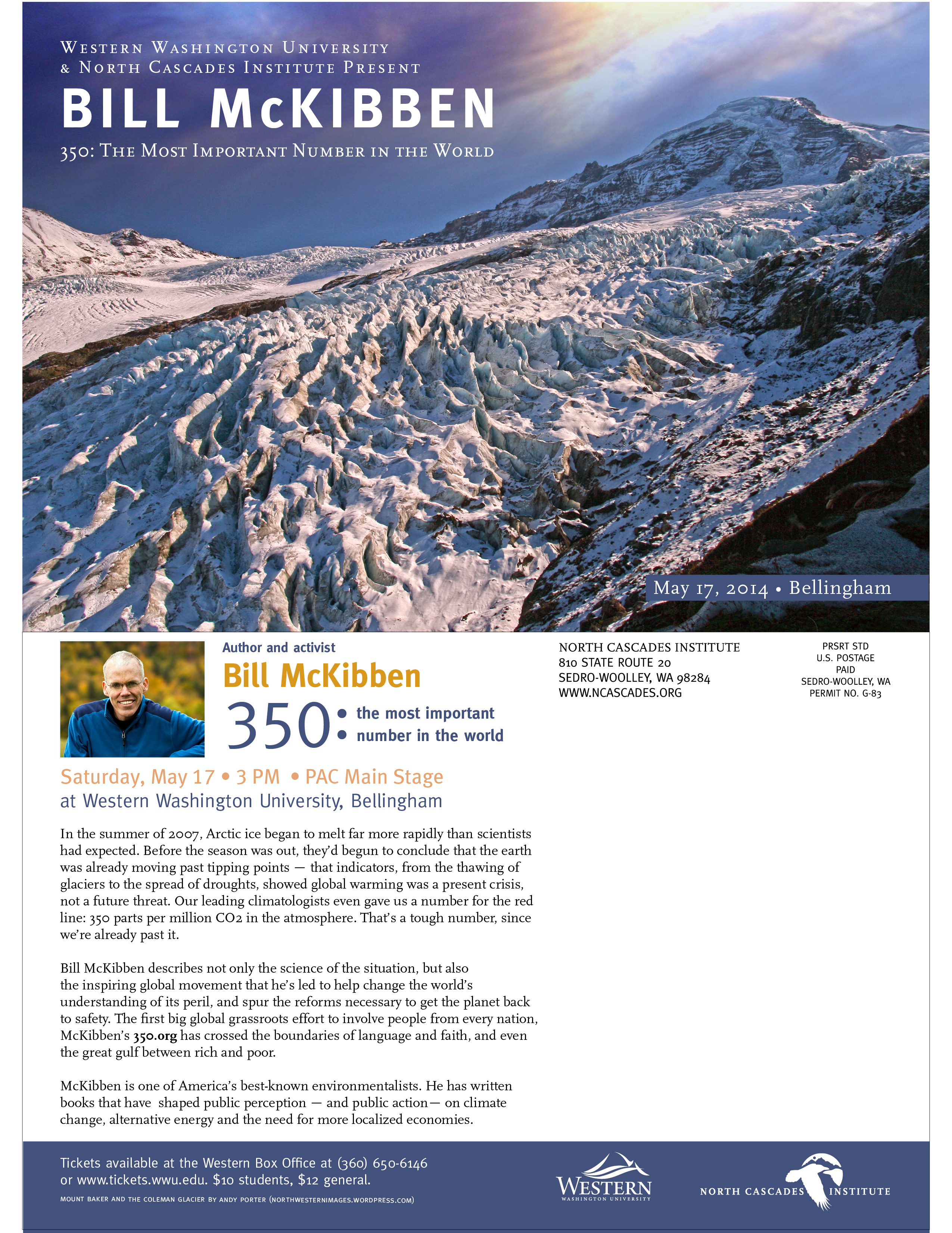
Bill McKibben at WWU in Bellingham, May 17th
For some time now I have donated use of my images to various groups. Washington Trails Association, North Cascades Institute, The Sierra Club, Washington Wild, National Resources Defense Fund, National Park Foundation, Cascade Loop Magazine and others have all used my images to help promote their message(s) of conservation, environmental protection and tourism.
This the first time one of my images has been used directly to promote something very important to me, namely, Global Warming and Climate Change! I am excited to attend the event.
This image is of Mount Baker and the Coleman Glacier from the Heliotrope Trail, on the north side of Mount Baker, in the North Cascades, in Washington State.
Nighttime Imaging Along Baker Lake Road
Baker Lake Road heads north from Highway 20. Skirting Lake Shannon, Baker Lake and finally the Baker River the road leads to darkness! About 20 miles up the road makes a sweeping curve over a cement bridge and this view of Mount Baker opens up.
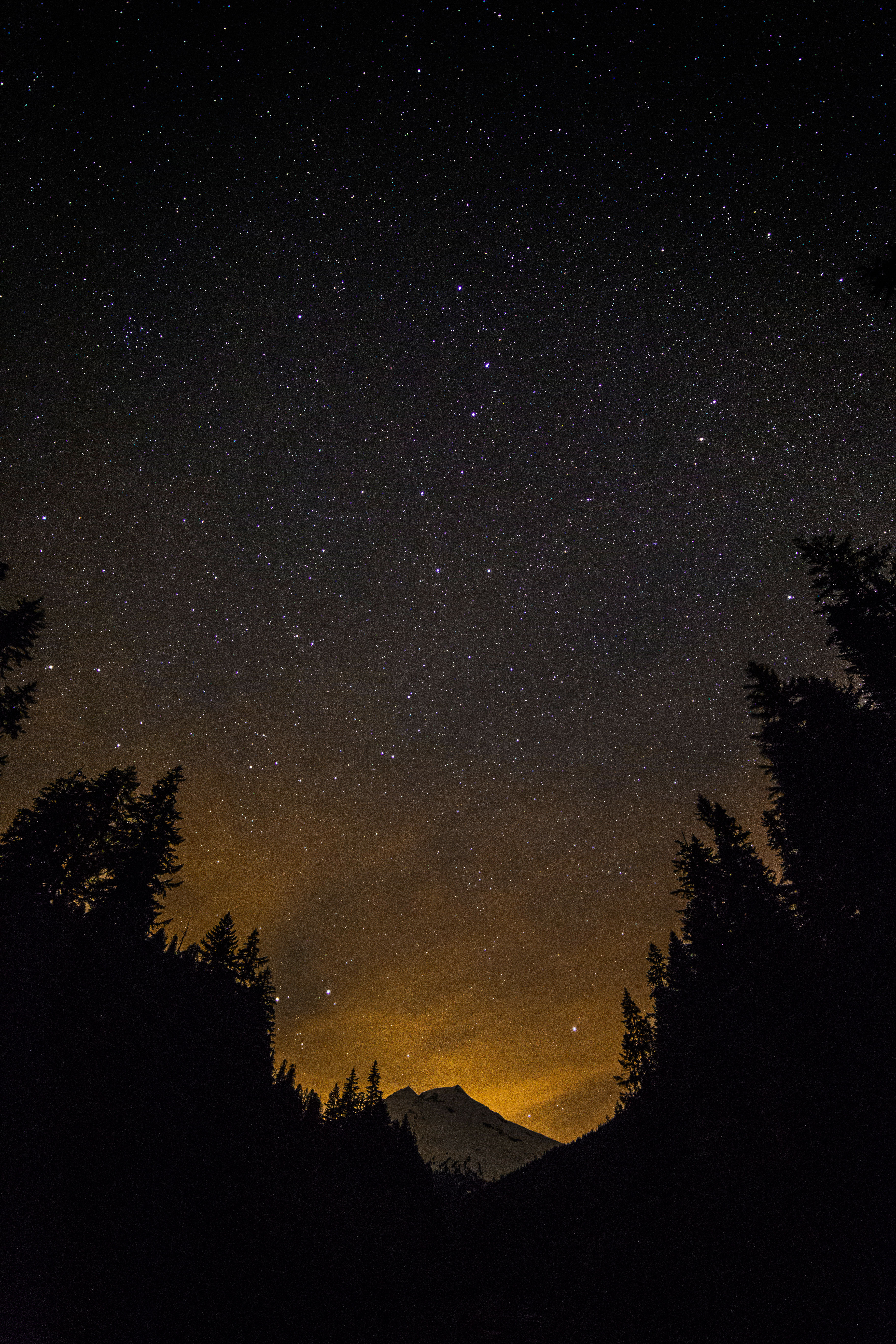 Mount Baker under the Big Dipper
The roads end soon follows and a short hike in the darkness offered this view of Baker River.
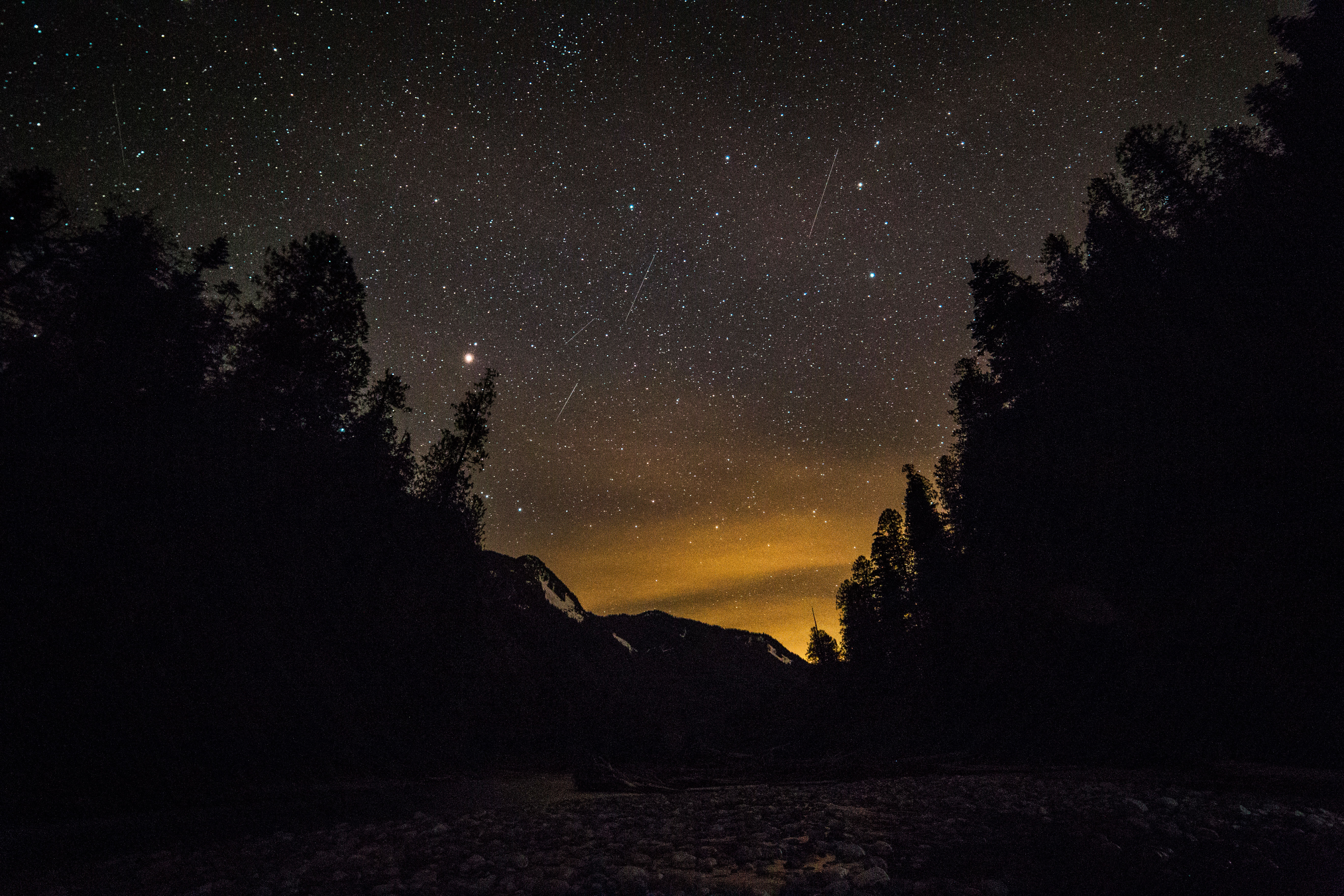 Baker River, North Cascades
On the Cover of Northwest Travel magazine
Here is an image I captured and it is now on the cover of the May/June Issue of Northwest Magazine! The image is Mount Logan and a waterfall on the North Fork Bridge Creek Trail, North Cascades National Park. One of my favorite places in the North Cascades…Here is a link describing how to get there!

Here is my full sized original image:
“Wilderness 50” Celebration
2014 marks the 50th anniversary of the signing of the Wilderness Act. In September of 1964 President Johnson signed into law the Wilderness Act, one of the most important pieces of legislation in the US regarding protection and preservation of Wilderness.
Wilderness 50 “The 50th Anniversary National Wilderness Planning Team (Wilderness50) is a growing coalition of federal agencies, non-profit organizations, academic institutions, and other wilderness user groups whose purpose is to plan and eventually implement local, regional, and national events and projects, specifically designed to elevate the profile of wilderness during the 50th anniversary celebration.”
One of their programs was to hold a photo contest and use the winning images as a part of their plans to inform people about the significance of the Wilderness Act.
More than 50 images were chosen and these will be displayed as large format prints in the Smithsonian Museum, in Washington DC starting in September!
I submitted several images to the competition and this image, here was chosen as an Honorable Mention in the People in Wilderness Category and will be used on signage for the various events and displayed in the museum.
 Sahale Glacier Camp in the Steven Mather Wilderness in North Cascades National Park, in Washington.
As a part of the process I was asked to submit a personal story about the image. Here it is:
“My connection with wilderness began when I was 16. I spent a month in the Sawtooth Wilderness in Idaho, learning how to backpack, climb and survive. The trip changed my life and encouraged me to continue. Treks along the Pacific Crest Trail and the Andes followed.
Then my life changed again and I was off on a different purpose. For almost 20 years I followed the light only to wind up in the darkness. And then I felt the wilderness call to me again, beckoning me back into her arms.
I had packed my old life in boxes and uncovering them produced an old hiking guide. I scoured it and found the most exciting sounding trip in there, recruited a few friends to accompany me and off we started.
I had forgotten what mileage and elevation gain portended and as we began our trip up to Sahale Camp. It slowly came back to me, what sweat and struggle were all about.
We finally made it to the camp well after dark and collapsed in our tent.
This image was captured the next morning. My life was changed anew; I had found a new purpose. Wilderness had rescued me again.”
I am excited and proud that any image of mine would be used to promote and protect wilderness!
Tips for Taking Great Trail Photos
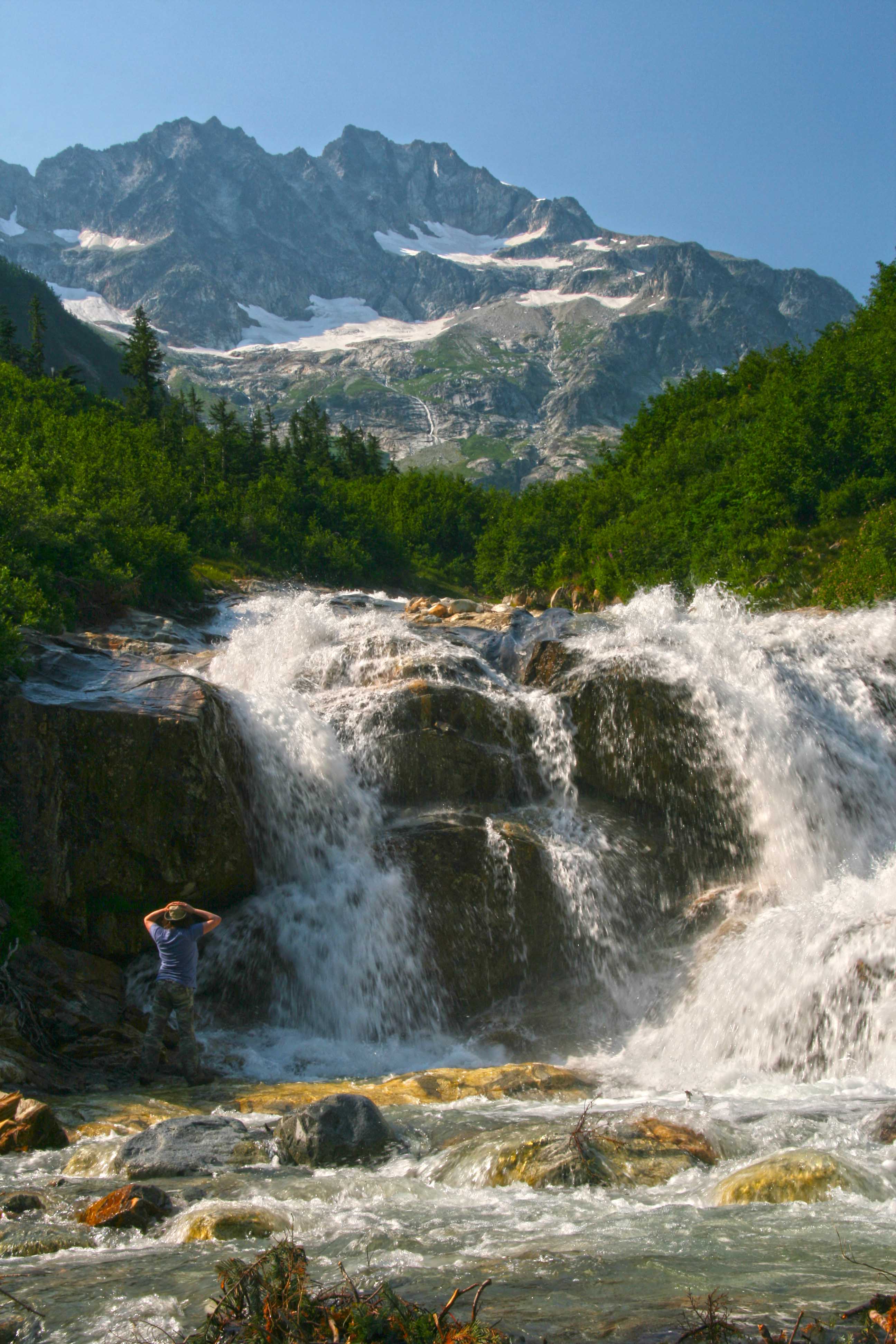
1. The best light is in the morning and evening. Day hikes get you to your destination in the middle of the day. Plan your campsites to include the most scenic places. This may involve longer or shorter days that you would normally do, but it’s all worth it! A guide book is good for descriptions, you can get many great ideas of what and when to shoot but if I’ve never been to an area before, I do an image search for the specific place and get ideas of what’s there. I plan my entire trip around where I want to be at sunrise and sunset to take pictures.

2. Minimum of what to bring with you:
a. One lens – I always bring a Zoom Lens, a 24mm to 104mm or a 28mm to 135mm are good starting spots. This makes it possible to capture a wide angle shot and also get in close with the telephoto end. Of course it’s nice to have several lenses, but then you have to carry them!
b. Polarizer – This is a filter that attaches to the end of your lens. It handles refracted light so that the sky and clouds look wonderful and is a must for getting stunning images of water and reflections.
c. Light weight tripod, they are cheap and easy to strap on your pack. You can always weigh them down if needed
d. Simple cable release. When you use the tripod any movement of the camera makes the image blurry. This device allows take pictures without touching the camera.
e. Extra batteries, charged the night before you leave!
f. Lots of memory! Its cheap and doesn’t weigh anything
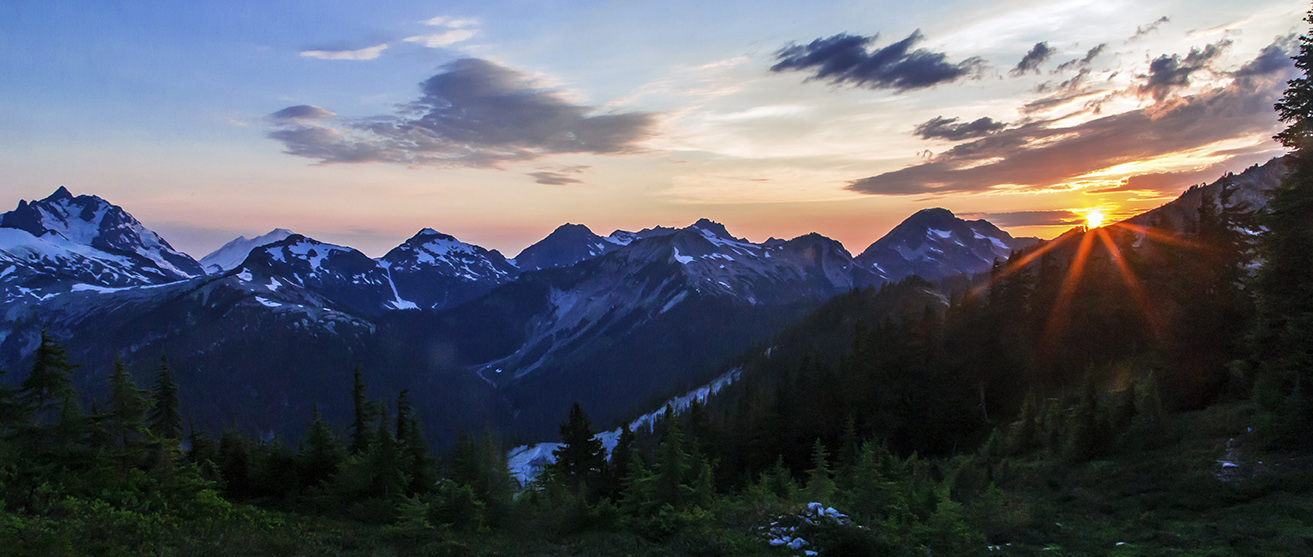
3. Avoid the auto mode for image capture. When you set the camera on automatic mode, the camera does all the thinking for you. You are a lot smarter than your camera! Instead use the Manual Mode on your camera or the various Creative Modes if there is no Manual setting.

4. Bracket your exposure. Bracketing means that you are capturing the same exact scene, but with different settings. This could include altering your depth of field (how much of the scene is in focus) or how bright or dark the image is. Scenes often have a great disparity between the dark areas and the bright ones. Try multiple shots, where you capture the details of one then the other.
a. Using the manual mode, set your aperture and shutter speed based on what the light meter tells you, THEN take several more shots of the same thing with slightly different exposures. If you have a manual setting, simply shoot over and under the recommended exposure.
b. If you are using a creative mode you can “trick” the light meter by pointing the camera a little bit above (or below or right or left) your intended subject, press the button half way, hold it, then lower or raise the camera back to your start spot and press the shutter the rest of the way.
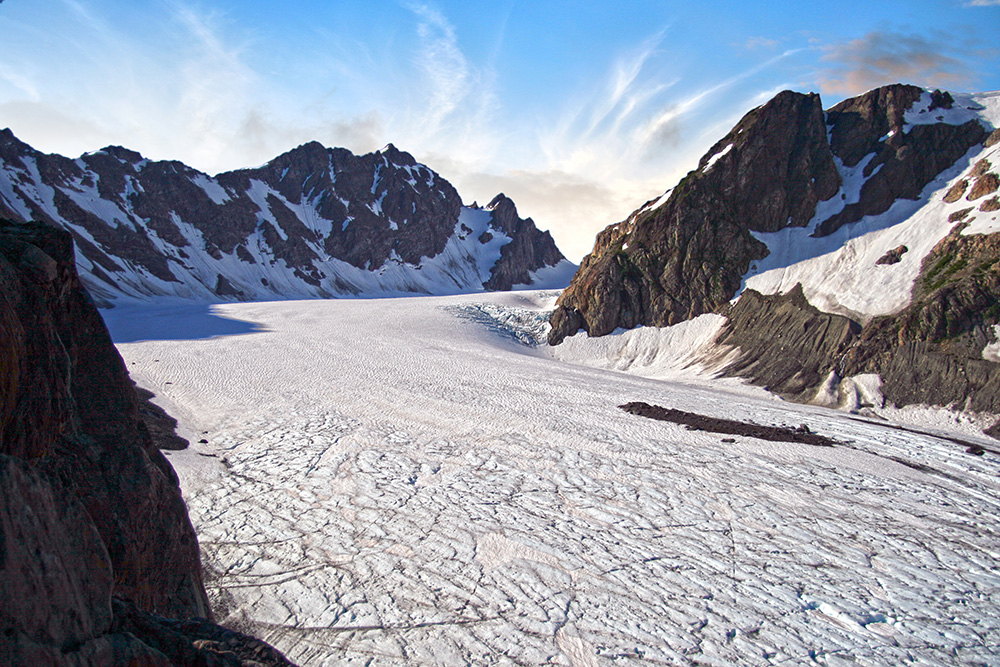
5. Shoot in the RAW format. JPEG format compresses (and looses data from) the images, where as RAW records all the data and allows you to handle areas of over or under-exposure. It took a lot of effort to haul all your gear out there, not to mention yourself! The scenery is fantastic, the weather is perfect, who knows if you will ever have a chance to return…so shoot in RAW!
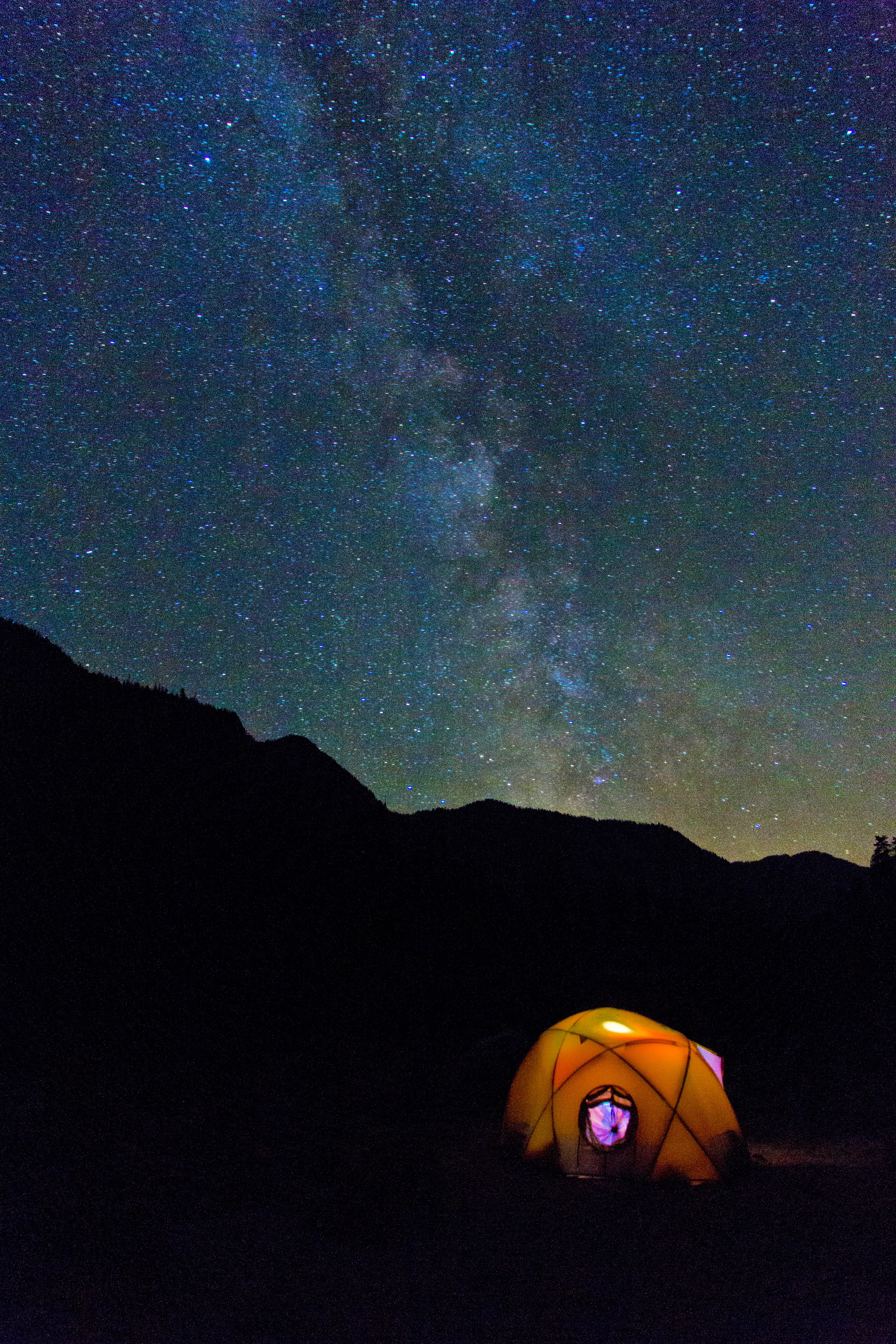
6. Four simple tips on Composition
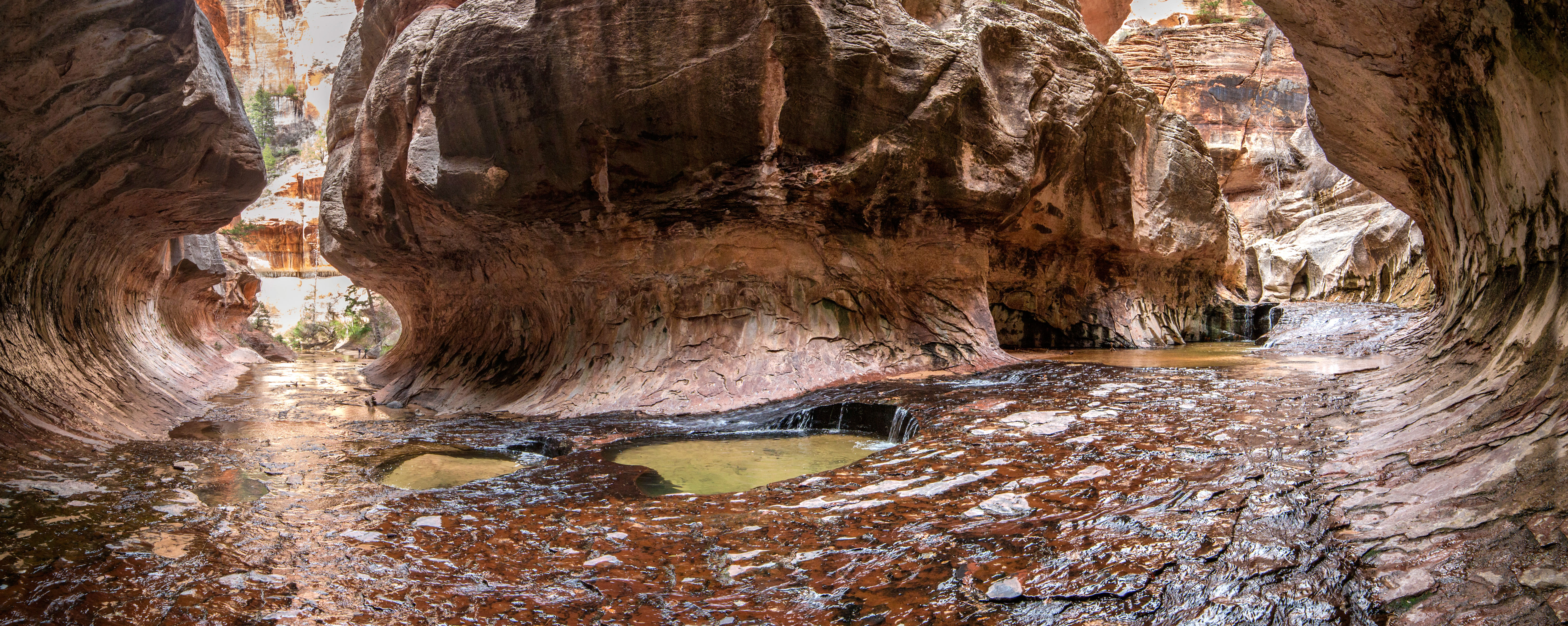
a. The Rule of Thirds. Imagine a tic-tac-toe grid over your image. Try to get your subject on these lines, away from the middle. Get points of interest where the lines intersect.
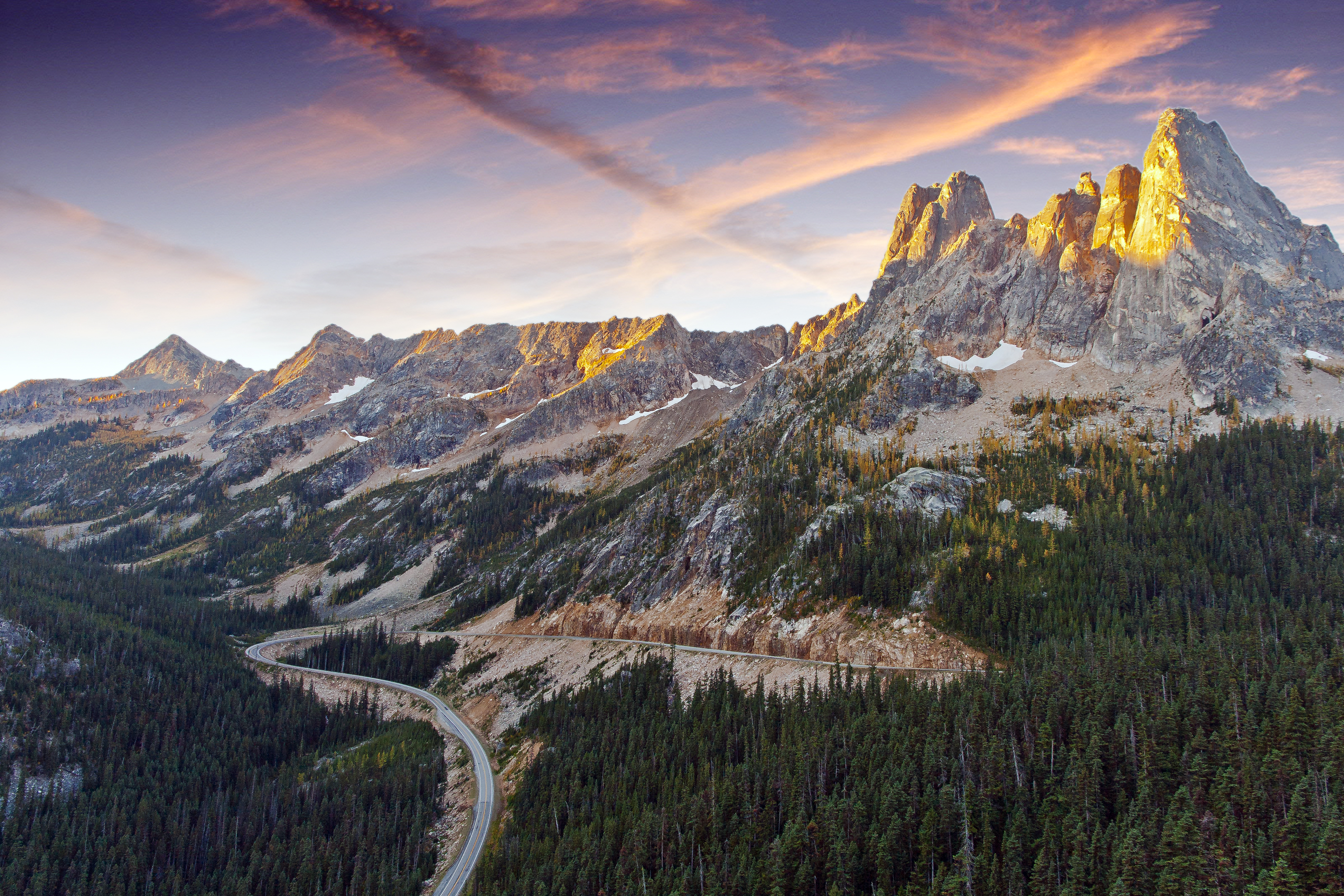
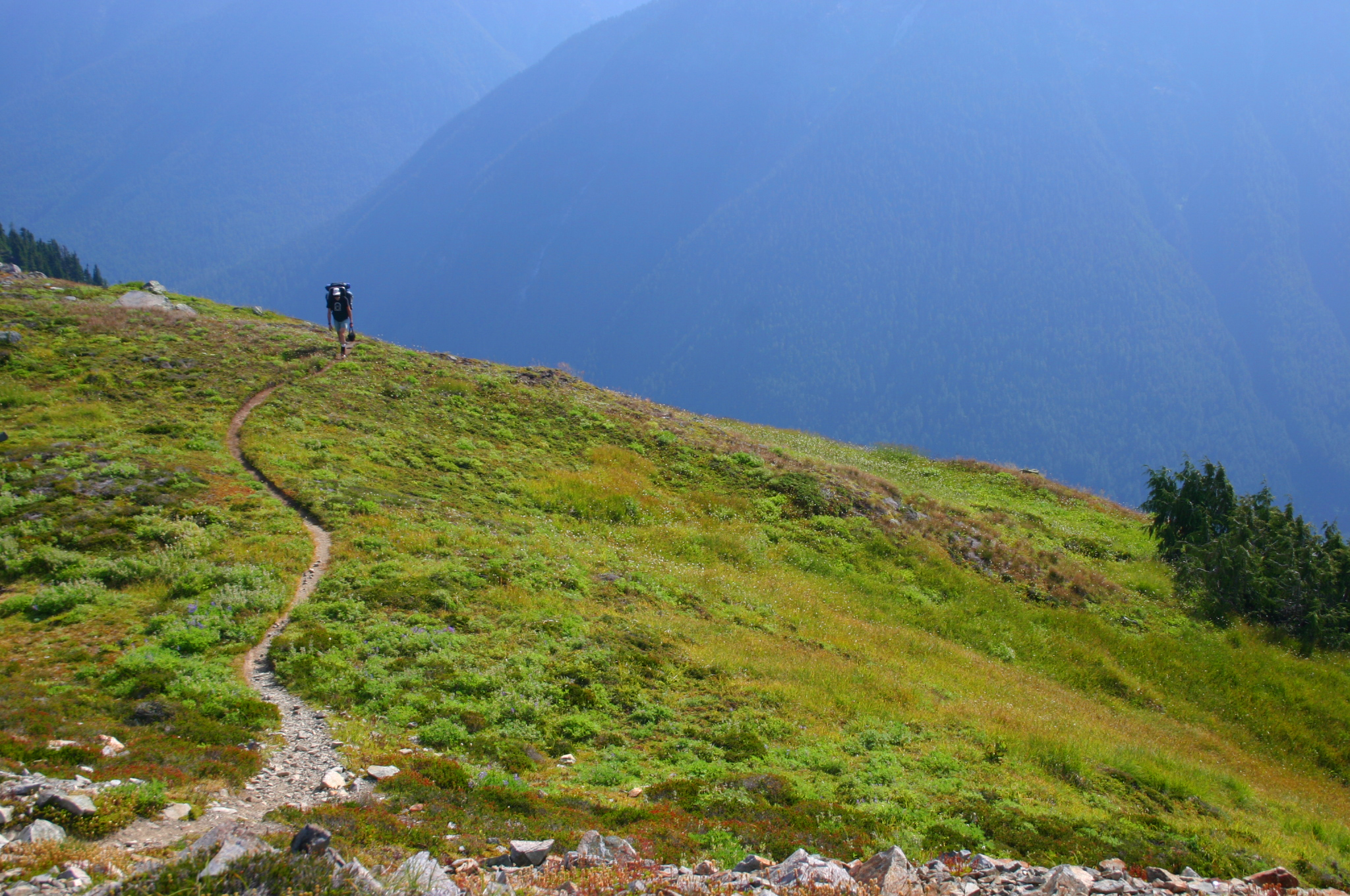
b. Look for lines. Trails, clouds, trees, and more can create leading lines that add a wonderfully simple and compelling element to images. When you see a line anywhere walk all around it composing shots from different angles.
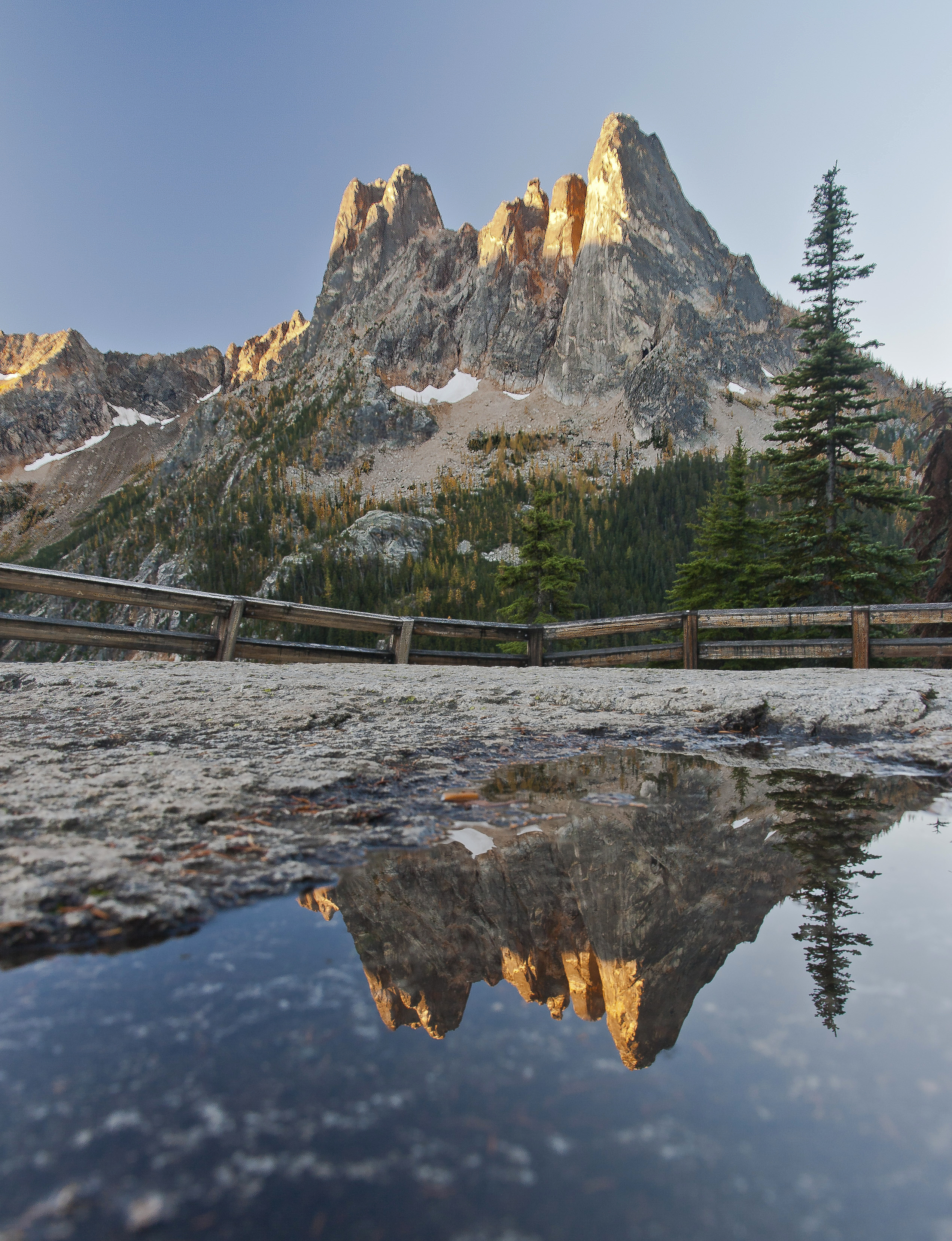
c. Reflections. Even a small puddle can make for a fantastic reflective composition. Get down on the ground for the best scope.

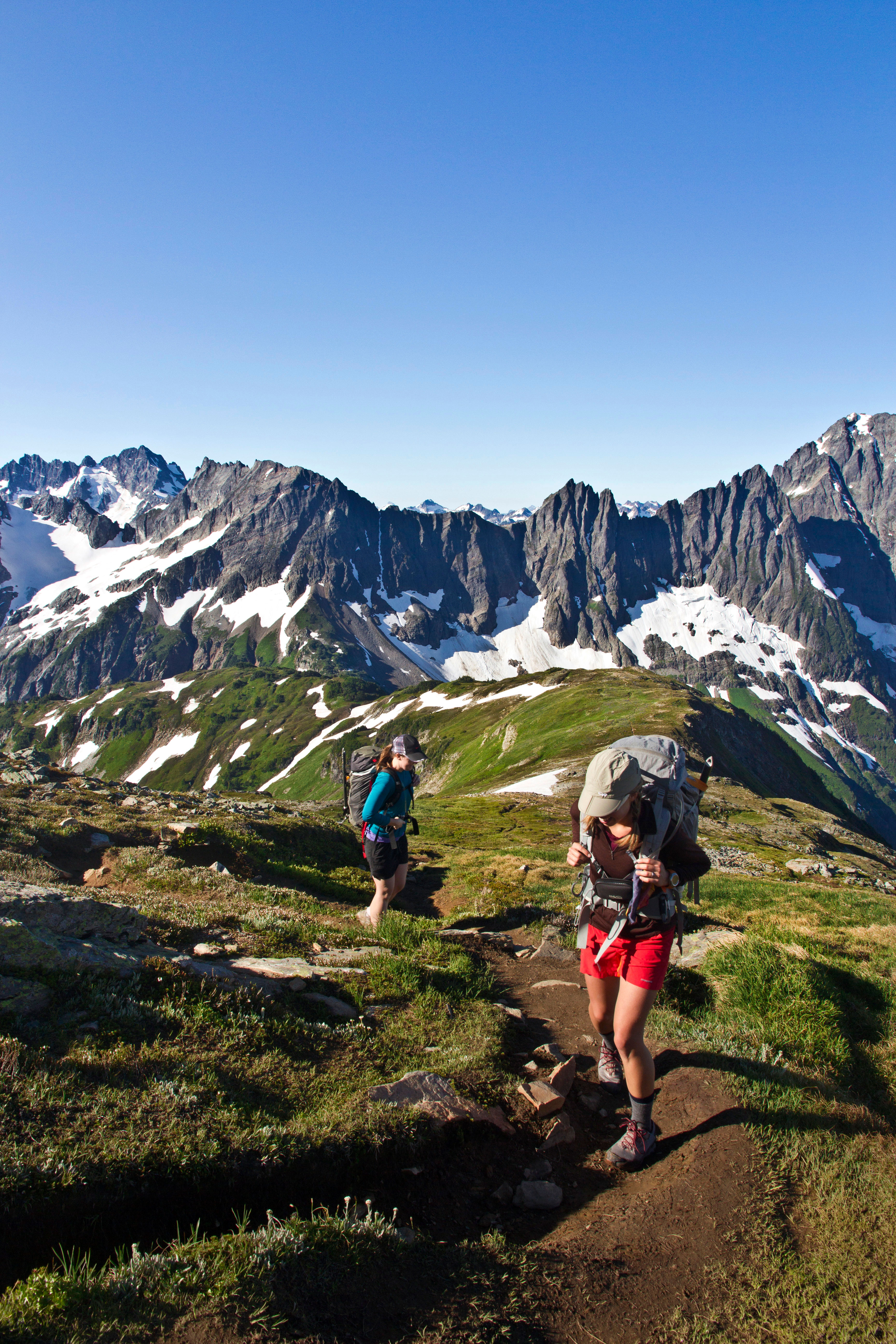
d. Near and Far. Pictures of an unbelievably awesome horizon will be 1,000 times better if you include something close. A tent, people, trees, flowers, any and all of these make a vista much more interesting.
Sahale Camp Panoramas
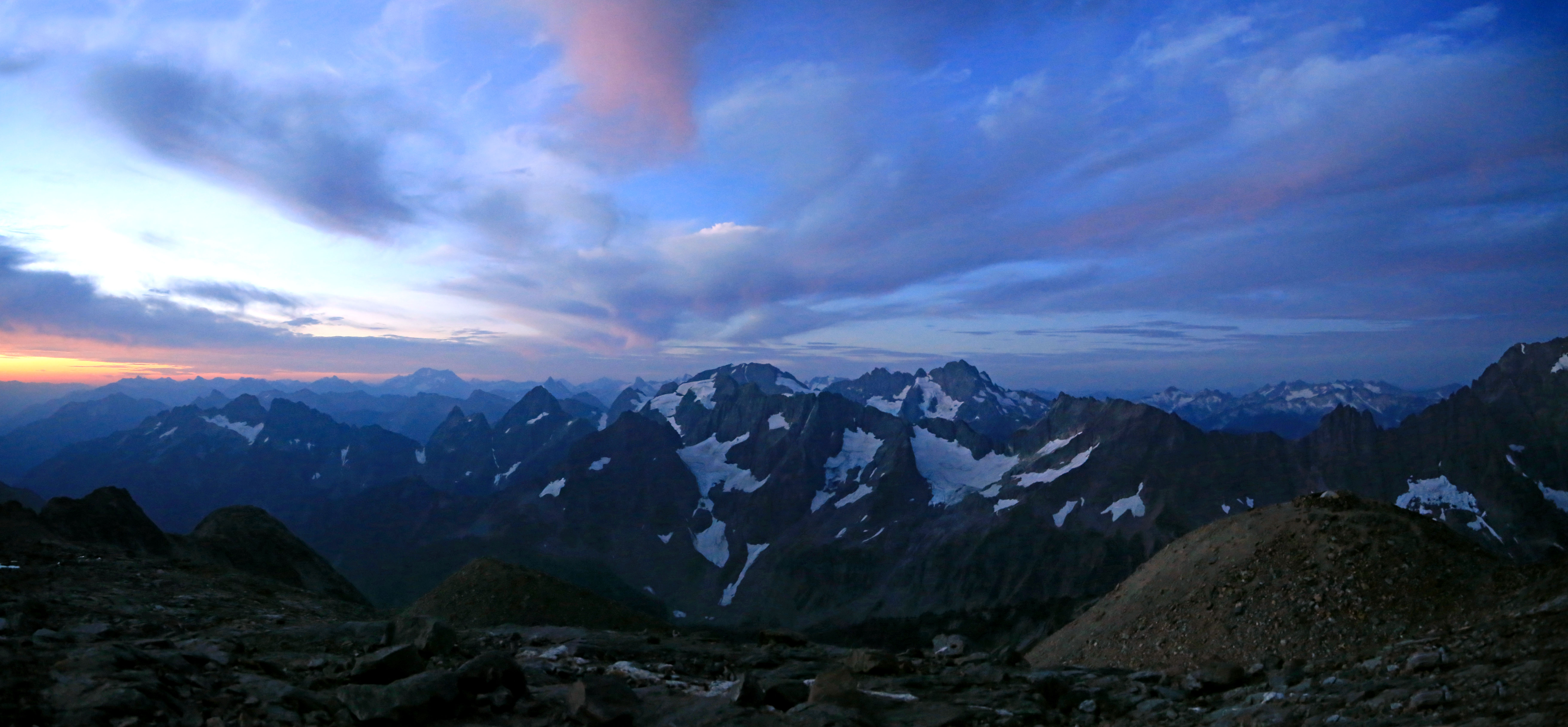
Sahale Glacier Camp sits at the base of Sahale glacier atop 3 piles of rubble each crowned with a ring of stone. The views are breathtaking: a 180 degree sweeping view of the North Cascades, a sea of peaks stretching out to the horizon.


I have visited many times and tried to capture the feel of the view. Here are several panoramas, some from sunrise, and several from sunset, each comprised of two or more images merged.




North Cascades Book
I just got word that these three images will be included in a new book about the North Cascades, due out in the Fall of 2014.
More details coming soon!
Camping under the stars
 Mount Baker and Coleman Glacier
 Hikers on Sahale Arm
 North Western Images - photos by Andy Porter